
The French Riviera Wedding Guide: Why the Cote d'Azur is the Ultimate Destination for a Luxury Celebration
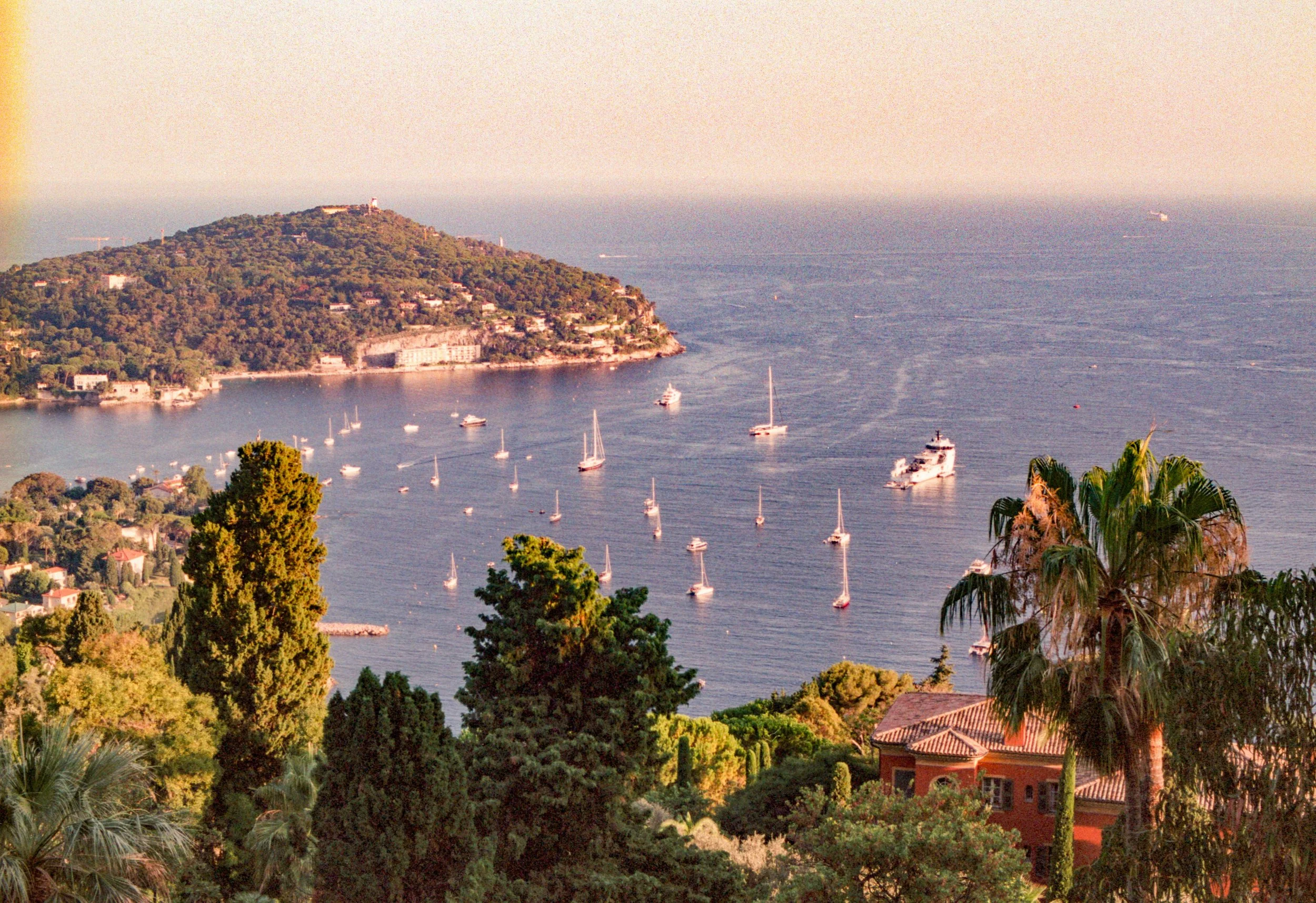
There is a reason the world's wealthiest families have been coming to the French Riviera for more than a century. The light is different here. The coastline is dramatic rather than gentle, the architecture carries the weight of history without feeling heavy, and the quality of life is woven into every detail, from the morning markets to the evening aperitif on a terrace overlooking the Mediterranean.
For couples considering a destination wedding in France, the Riviera often enters the conversation alongside Provence, Paris, and the chateaux of the Loire. But the Cote d'Azur offers something none of those regions can match: a concentration of world-class hotels, private estates, and cultural landmarks within a stretch of coastline that runs from Saint-Tropez to the Italian border. Every setting feels cinematic. Every evening feels like an event.
We have been planning luxury destination weddings across the south of France for over fifteen years, and the Riviera remains one of the most rewarding regions to work in. It is also one of the most complex. This guide covers what you need to know before you begin.
Understanding the Geography: From Saint-Tropez to Monaco
The French Riviera is not a single destination. It is a series of distinct towns and micro-regions, each with its own character, and choosing the right stretch of coastline for your celebration matters as much as choosing the right venue.
The Western Riviera: Saint-Tropez and the Gulf
Saint-Tropez has a reputation that precedes it, and that reputation is only partly deserved. Yes, the port is crowded in July, and the day clubs along Pampelonne beach are not subtle. But the Saint-Tropez peninsula also contains some of the most beautiful private estates on the Mediterranean, surrounded by pine forests and overlooking a coastline that has barely changed in decades. It is quieter than most people expect, particularly once you move away from the port itself.
The nearby commune of Grimaud, set back from the coast, offers a different register entirely. Historic, elevated, and peaceful. Hotels here feel more like private residences than commercial operations. For couples who want the Saint-Tropez postcode without the Saint-Tropez circus, this is where to look.
Logistics note: Saint-Tropez has no motorway access. Getting there from Nice airport takes roughly two hours in summer traffic, and there is no way around it. Helicopter transfers are common for a reason. If your guest list is large and your guests are arriving internationally, factor this in early.
Cannes and the Esterel Coast
Cannes is synonymous with the film festival, but for weddings it offers something more practical: excellent hotel stock, easy airport access (Nice is 30 minutes), and a town that is genuinely walkable. Your guests can occupy themselves for a long weekend without needing transfers to every activity.
West of Cannes, the coast becomes more dramatic. Theoule-sur-Mer and Mandelieu-la-Napoule sit beneath the red rocks of the Esterel massif, and the venues here have a theatrical quality that is hard to find elsewhere. Clifftop settings, medieval fortifications, and gardens that tumble down to the waterline.
Antibes and Cap d'Antibes
Antibes is the Riviera for people who actually live here. The old town is beautiful, the Marche Provencal is one of the best daily markets in France, and Cap d'Antibes itself is home to some of the most exclusive hotel properties in Europe. There is a reason heads of state and film industry figures choose this particular stretch of coast. It is private without being remote, glamorous without being performative.
Nice, Villefranche, and the Cap-Ferrat Peninsula
Nice is the largest city on the Riviera, and its international airport is the gateway for virtually every guest arriving from outside France. But Nice is also a destination in its own right. The old town, the Promenade des Anglais, the Matisse and Chagall museums, the restaurants. For a multi-day wedding weekend, basing your guests in or near Nice simplifies logistics significantly.
East of Nice, the coastline becomes more intimate. Villefranche-sur-Mer has one of the most beautiful natural harbours in the Mediterranean. The Cap-Ferrat peninsula, just beyond, is where old money has lived quietly for generations. The venues here are among the most extraordinary on the entire coast: palatial Belle Epoque hotels, Rothschild gardens, cliffside estates with direct sea access.
Eze, Roquebrune, and the Italian Border
The stretch between Eze and Roquebrune-Cap-Martin is the Riviera at its most vertical. Perched villages, plunging views, and a sense of being suspended between the mountains and the sea. The hotels along this final section of coast tend to be newer, more contemporary in design, and they attract a younger clientele who appreciate architecture and setting in equal measure.
What Makes a Riviera Wedding Different
Planning a wedding on the French Riviera is not the same as planning one in the French countryside, and couples who approach it with a chateau mindset will find the experience jarring. The differences are practical, financial, and logistical.
The venue landscape
Riviera weddings typically take place in one of three settings: luxury hotels, private villas, or cultural landmarks. The chateau model that dominates Provence, the Loire, and Bordeaux (hire the entire property, bring in all your vendors, have the run of the estate) is largely absent here. Instead, you are working with professional hospitality operations that have their own catering teams, their own service standards, and their own expectations about how an event will run.
This is not a disadvantage. The quality of in-house catering at the top Riviera hotels is exceptional, often Michelin-level, and you avoid the enormous logistical exercise of building a wedding from scratch in an empty venue. But it does mean less creative control. You are collaborating with the venue's team rather than directing your own.
Budget reality
The Riviera is expensive. That should not come as a surprise, but the specifics are worth understanding. Per-head catering at the top hotels starts around EUR 250 and can reach EUR 500 or more for a bespoke menu with premium wines. Venue hire or minimum spend requirements at the most prestigious addresses regularly exceed EUR 50,000 for a single evening. Guest accommodation, if your guests are staying at the wedding venue or nearby five-star hotels, adds significantly to the overall spend.
For a celebration of 80 to 120 guests at a top-tier Riviera venue, realistic total budgets sit between EUR 300,000 and EUR 600,000. That is materially higher than an equivalent celebration in Provence or Bordeaux, and couples should enter the conversation with open eyes.
The summer question
July and August on the Riviera are hot, crowded, and expensive. The coast road between Cannes and Monaco becomes gridlocked, hotel rates peak, and availability at the best venues is limited not only by weddings but by the sheer volume of private events, corporate functions, and seasonal programming that fills the calendar.
June and September are significantly better for weddings. The weather is warm without being oppressive, the roads are manageable, venues are more flexible on dates, and the overall experience for your guests is more relaxed. Early October can work beautifully in the east of the Riviera, where the microclimate stays warm well into autumn.
The Venues Worth Knowing
We will not attempt to list every venue on the Riviera. Instead, these are the properties we believe deserve serious consideration for a luxury celebration, based on our own knowledge and recent site visits.
Hotels
Hotel du Cap-Eden-Roc in Cap d'Antibes is the most iconic address on the coast. The grounds, the clifftop pavilion, the sense of occasion. It is not a venue you need to dress or transform. It simply is. Capacity is limited and the minimum spend reflects the property's status, but for couples who want the pinnacle, this is it.
Grand-Hotel du Cap-Ferrat, a Four Seasons property, offers eleven acres of private gardens on the Cap-Ferrat peninsula. The setting is more intimate than Eden-Roc, the gardens are extraordinary, and the service standard is Four Seasons at its best. This is the venue for couples who want discreet, effortless luxury.
Cap Estel in Eze-bord-de-Mer is the insider's choice. Five private acres on its own peninsula, invisible from the road, with direct sea access and a sense of seclusion that no other hotel on the coast can match. Most people drive right past without knowing it exists. That is precisely the point.
The Maybourne Riviera in Roquebrune-Cap-Martin is the newest serious addition to the coast. Contemporary architecture, extraordinary views toward Monaco, and the Maybourne group's meticulous service standards. For couples drawn to modern design rather than Belle Epoque tradition, this is the address.
Cultural landmarks and private estates
Villa Ephrussi de Rothschild on Cap-Ferrat is one of the most beautiful properties in Europe. Nine themed gardens, a rose-pink palazzo, and views across both sides of the peninsula. Weddings here have a grandeur that is difficult to replicate anywhere else, though the venue's cultural status means there are restrictions on what can and cannot be done within the spaces.
Chateau de la Napoule in Mandelieu sits directly on the waterline, medieval stone meeting the Mediterranean. The gardens were designed by Marie Clews, while her husband Henry, an American sculptor, filled the property with his fantastical works. The entire estate has an artistic, slightly otherworldly quality that photographs beautifully.
Palais Bulles in Theoule-sur-Mer is, quite simply, unlike anything else on the Mediterranean. Designed by the Hungarian architect Antti Lovag and owned by the Cardin estate, it is a series of interconnected bubble-shaped structures cascading down a clifftop toward the sea. It is polarising, extraordinary, and utterly unforgettable. For couples with bold taste, there is nothing comparable.
Logistics Your Guests Will Thank You For
The Riviera is compact, which is both its advantage and its challenge. Distances are short on paper but slow in practice, particularly during the summer months. Thoughtful logistics planning is what separates a seamless guest experience from a stressful one.
Airport transfers
Nice Cote d'Azur is the only international airport on the Riviera, and it is well connected to major US, UK, and European hubs. For venues between Nice and Monaco, transfers are straightforward. For venues further west (Cannes, Theoule, Saint-Tropez), dedicated group transport is essential. Private coaches for the majority of guests, with helicopter transfers available for the couple, family, or anyone arriving from a different direction.
Guest accommodation
One of the Riviera's strengths is the depth of hotel stock. Even if your venue cannot accommodate all of your guests on site, there are excellent options nearby at every price point. We typically negotiate room blocks at two to three hotels within a short radius of the venue, providing options for different budgets without compromising on quality.
The welcome dinner and post-wedding brunch
Multi-day celebrations are the norm for destination weddings, and the Riviera is exceptionally well suited to them. A welcome dinner at a restaurant along the port in Villefranche, a post-wedding brunch on a hotel terrace overlooking the sea, an afternoon at a beach club in between. The infrastructure for guest entertainment already exists. You do not need to build it from scratch.
Why the Riviera Rewards a Planner Who Lives Here
The French Riviera operates differently from the French countryside. The vendor ecosystem is more commercial, the venues are more professionally managed, and the pace of communication is faster. Relationships matter here, and so does local knowledge. Understanding which hotels are flexible on external vendors and which are not. Knowing which stretches of coast road to avoid on a Saturday evening in June. Having a working relationship with the events teams at properties that do not accept unsolicited enquiries.
We live in the south of France and have been working with Riviera venues and vendors for over fifteen years. That history does not make us the only planners who can deliver a beautiful wedding here, but it does mean we understand the practical realities in a way that a planner visiting for the first time simply cannot.
If you are considering a wedding on the French Riviera, we would be glad to talk. Our approach is transparent, commission-free, and built around the specific needs of each couple we work with.
Frequently Asked Questions
How far in advance should we book a Riviera wedding venue?
Twelve to eighteen months is ideal for the most sought-after properties. Some hotels release their events calendar on a rolling basis, and popular dates in June and September are the first to go. If you have a specific venue in mind, beginning the conversation early gives you the strongest position.
Is a Riviera wedding always more expensive than Provence?
In most cases, yes. The per-head catering costs are higher, the venue hire or minimum spend requirements are steeper, and guest accommodation tends to be pricier. A comparable celebration on the Riviera typically costs 30 to 50 per cent more than in Provence. The trade-off is a level of hotel infrastructure, service, and setting that the countryside simply does not offer.
Can we have an outdoor ceremony on the Riviera?
Symbolic ceremonies can be held outdoors at virtually every venue. Legal ceremonies in France must take place at the local mairie (town hall), which is a short and separate formality. Many couples complete the legal ceremony before the wedding weekend and hold a symbolic ceremony at their chosen venue on the day itself.
What is the best time of year for a Riviera wedding?
June and September offer the best combination of weather, availability, and guest experience. July and August are hot and busy. Early October can be beautiful in the east of the coast, particularly between Nice and Monaco. May is an option but carries a slightly higher risk of unsettled weather.
Do we need to speak French to plan a wedding on the Riviera?
Not if you are working with a bilingual planner. The top hotels operate comfortably in English, but vendor communication, municipal paperwork, and day-to-day coordination are overwhelmingly conducted in French. A planner who operates fluently in both languages removes that barrier entirely.