
How to Choose a Wedding Planner for Your Destination Wedding (and What to Ask Them)
By India Bottomley, Creative Director at Best Events Co.
Last updated: March 2026
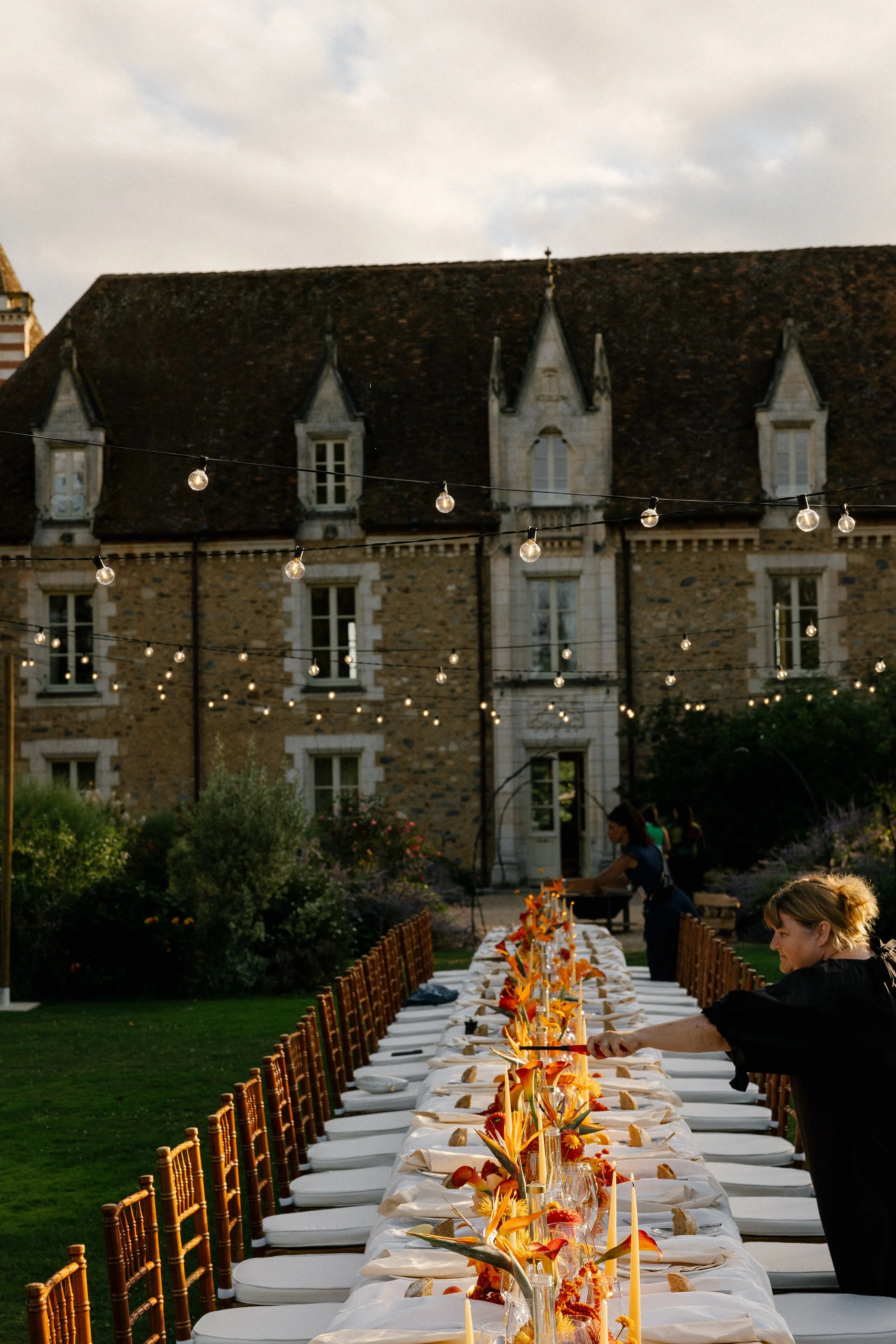
Photo: Bring Me Somewhere Nice
Choosing a wedding planner for your destination wedding is the single most consequential decision you will make in the entire planning process. More consequential than the venue. More consequential than the caterer, the florist, or the photographer. The right planner will shape every element of your celebration, protect your budget, solve problems before you know they exist, and ensure that the weekend unfolds seamlessly. The wrong one will cost you time, money, and peace of mind, and by the time you realise the fit is wrong, it may be too late to course-correct without significant disruption.
After planning over 200 destination weddings across France and Italy, here is our honest advice on how to evaluate a planner, what to ask them in that first conversation, and what should make you walk away.
The Questions You Should Always Ask
These are not trick questions. They are straightforward, and a planner worth hiring will welcome every one of them. The answers will tell you more about the planner's integrity, experience, and suitability than any portfolio or Instagram feed ever could.
Do you take commissions from vendors?
This is the most important question, and it should be the first one you ask. If the answer is yes, you need to understand what that means for your celebration: the planner has a financial incentive to recommend certain vendors regardless of whether they are the best fit for you. If the answer is evasive, vague, or dismissive ("that's industry standard" or "it doesn't affect my recommendations"), you have your answer.
A planner who works on a transparent fee with no commissions has their interests aligned with yours. They earn the same regardless of whether your florist charges €15,000 or €50,000, which means their recommendation is based purely on quality and fit. At Best Events Co., we do not accept commissions. All vendor contracts are signed directly between the client and the vendor. Our only income is our transparent planning fee. Because our fee is percentage-based, it would be unethical to then also take commissions on the vendor spend within that budget.
How many weddings do you take on per year?
Luxury wedding planning is time-intensive and deeply personal. A planner who is managing 25 or 30 weddings in a single season cannot give each couple the attention they deserve. The creative direction, the vendor management, the budget oversight, the emotional support: all of it suffers when the planner's attention is divided too many ways.
At Best Events Co., we limit ourselves to a maximum of 10 per calendar year. Every couple gets our full focus, from the first consultation through to the last coach leaving at 3am. Ask the planner how many celebrations they manage per season. Fewer than 15 is a reasonable benchmark at the luxury level. Fewer than 10 is ideal. More than 20 is a warning sign.
Can I see a real budget breakdown from a past wedding?
Any planner worth hiring should be able to show you, in anonymised form, how a past client's budget was allocated across categories. This demonstrates three things simultaneously: transparency about how money is spent, financial competence in managing complex budgets, and genuine experience planning at the level you are considering. A planner who cannot or will not show you real numbers either does not have the experience they claim or is not comfortable with the level of financial scrutiny that a luxury celebration demands.
Who will actually be at my wedding on the day?
At some planning companies, the person you meet in the initial consultation is not the person who will be managing your celebration on the ground. The founder does the sales call. A junior team member runs the wedding. Ask directly: will you personally be at my celebration? If not, who will be, and can I meet them before I commit?
At Best Events Co., India and Samantha are personally involved in every celebration. The people you meet in the first conversation are the people coordinating your wedding weekend. This continuity matters more than most couples realise until they experience the alternative.
What happens if something goes wrong on the day?
The answer should be specific, not reassuring platitudes. A good planner has contingency plans for weather changes, vendor cancellations, logistical failures, medical emergencies, and anything else that could disrupt the celebration. They should be able to give you real examples of problems they have solved, not hypothetical assurances that everything will be fine.
We have dealt with a bride's father's vintage wedding car breaking down during the celebration (the venue's butler, who knew cars, got it running again and the couple did not find out until after the wedding). We have called ambulances for guests, coordinated with local medical services in French, managed last-minute vendor substitutions, and handled electrical signoff issues from local councils. These things happen. The question is not whether your planner can prevent every problem. It is whether they can solve problems invisibly, without your guests, or you, ever knowing there was an issue.
Red Flags to Watch For
Beyond the questions above, there are warning signs that should give any couple pause. None of these are absolute disqualifications on their own, but any combination of them should prompt serious reflection.
Evasiveness About Fees or Commissions
If a planner cannot clearly and immediately tell you how they are compensated, what their fee covers, and whether they receive any financial benefit from the vendors they recommend, that is a problem. Transparency about money is the foundation of trust, and if it is missing in the first conversation, it will not improve later.
Only Photoshoots in Their Portfolio
A portfolio should show real weddings, not just styled shoots. Styled shoots are controlled environments with hand-picked vendors, no real guests, no logistical complexity, and no pressure. They demonstrate design taste but not operational capability. Ask to see real celebrations with real clients, real guest counts, and real logistics. If the portfolio is entirely styled shoots, the planner may not have the event management experience that a luxury destination wedding demands.
Lack of Client Testimonials
Past clients are the most reliable indicator of what working with a planner is actually like. If a planner cannot provide testimonials, references, or reviews from real couples, ask why. Strong client relationships generate strong testimonials naturally. Their absence is worth questioning.
Limited Experience for Large-Scale Events
Planning a 30-guest elopement and planning a 150-guest multi-day celebration are fundamentally different skills. If the planner's experience is primarily with smaller events and you are planning something substantial, ensure they have the operational capacity, the team, and the vendor network to deliver at your scale. Freshness in the industry is not necessarily a problem, everyone starts somewhere, but it is worth understanding where they are on that journey and whether your celebration is the right scale for their current capability.
Inability to Speak the Local Language Fluently
For a wedding in France, your planner needs to speak fluent French. Not conversational French. Not menu-ordering French. Fluent, professional French that can negotiate contracts, manage crises, liaise with local authorities, and communicate nuance with vendors who may not speak English. When things come unstuck, and they inevitably do at some point in every celebration, the ability to communicate rapidly and precisely in French is the difference between a quick resolution and a serious problem.
Recycled Designs
Every celebration should be original. If a planner shows you a design concept that looks identical to another wedding on their portfolio, or presents someone else's real wedding as a "concept" or "mood board" for yours, that is a red flag. Bespoke means bespoke. Your celebration should reflect you, not the planner's template.
What Makes Couples Choose Best Events Co.
Our clients tell us it is the transparency. The fact that we share our fee structure in the very first conversation, openly and without prompting. The commission-free model, which means every vendor recommendation is made in the client's interest, not ours. The mother-daughter dynamic, which signals trust, longevity, and a personal investment in the business that goes beyond the transactional. And India's background in property law, which gives clients confidence that their contracts, their finances, and their legal interests are in meticulous hands.
But beyond any of that, it is the relationships. Our clients feel looked after. They feel heard. Their vision is treated with respect and their concerns are addressed honestly. By the time the wedding weekend arrives, they feel like they are celebrating with people who genuinely care about them. That is not something you can manufacture, and it is not something that scales to 30 weddings a year. It is the natural product of working with a small number of couples, giving each one our full attention, and being invested in the outcome as people rather than just as professionals.
The First Conversation
Pay attention to how it feels. Not just what the planner says, but how they say it. Are they listening to you or selling to you? Are they asking about your vision or telling you about their process? Do they seem genuinely curious about who you are as a couple, or are they moving through a script?
The best planner-client relationships feel like a partnership from the very first call. There is a mutual respect, a shared excitement about the celebration, and an honesty that sets the tone for everything that follows. If the first conversation feels transactional, the relationship probably will too. Trust your instincts on this. You are choosing someone who will be intimately involved in one of the most important experiences of your life. The fit needs to be right on a human level, not just a professional one.
Frequently Asked Questions
How do I choose a wedding planner for a destination wedding?
Ask about commissions, capacity (how many weddings per year), experience at your scale, who will be on-site on the day, and how they handle problems. Look for transparency, genuine experience with real weddings (not just styled shoots), and a planning philosophy that aligns with your values. Most importantly, trust your instincts about the relationship. The chemistry matters.
Should I hire a local planner or fly one in?
For a destination wedding in France, we strongly recommend a France-based planner. Local vendor relationships, fluent French, on-the-ground knowledge, and the ability to respond quickly to problems are essential advantages that cannot be replicated by a planner visiting from abroad once a year.
How many weddings should a luxury planner take on per year?
At the luxury level, fewer than 15 is a reasonable benchmark. Fewer than 10 is ideal. More than 20 suggests that individual attention may be compromised. The complexity of luxury destination weddings demands focused, sustained attention over many months. That is only possible with a manageable calendar.
What should I look for in a planner's portfolio?
Real weddings, not just styled shoots. Evidence of celebrations at the scale and style you are planning. Diverse venues and design approaches (indicating creativity rather than a template). Client testimonials. And an aesthetic sensibility that resonates with your own taste, even if your celebration will be entirely different from anything they have done before.
When should I hire a planner?
As early as possible. The planner should be your first booking, before the venue. They will help you identify the right venue, the right region, and the right approach, which saves time and prevents costly mistakes. For a 2027 wedding, spring 2026 is optimal.
If you are planning a destination wedding in France and would like to discuss your plans, we would welcome the conversation. At Best Events Co., we have over fifteen years of experience planning luxury celebrations across France and Italy. We work on a commission-free basis, which means every recommendation we make is guided by your interests alone.
We invite you to get in touch.